Summer 2026 was the hottest ever recorded in Trentino. What urban heat islands are, why they form and how satellite data help decide where to intervene.
Summer 2026 was the hottest ever recorded in Trentino.
Over the three summer months, the Trento (Laste) weather station recorded as many as 67 days above 30°C (32 of them consecutive) and 30 tropical nights, the highest values in more than a century of measurements. On 31 July in particular, Rovereto reached 40.3°C, the highest value ever recorded by its weather station, and Trento (Laste) hit 38.2°C.
These figures mostly describe the general rise in temperatures linked to global warming. Behind values this high lies another phenomenon, one we hear about more and more often: urban heat islands.
But what exactly are they? It is not (only) a matter of how hot a city gets, but of how much hotter it is than the rural areas around it.
According to Greenpeace Italy's report "L'estate che scotta" ("The scorching summer"), based on Istat data, in summer 2025 Trento ranked third among Italy's regional capitals for the intensity of its urban heat island, with as much as 96% of its population living in areas with intense or very intense heat islands. Its average surface-temperature difference from the surrounding rural areas is 13.9°C. Yet Trento is also the capital with the lowest maximum surface temperature (Greenpeace Italy, June 2026). So it is not the hottest city, but one where the contrast with the surrounding territory is among the sharpest.
When it is the city that heats up
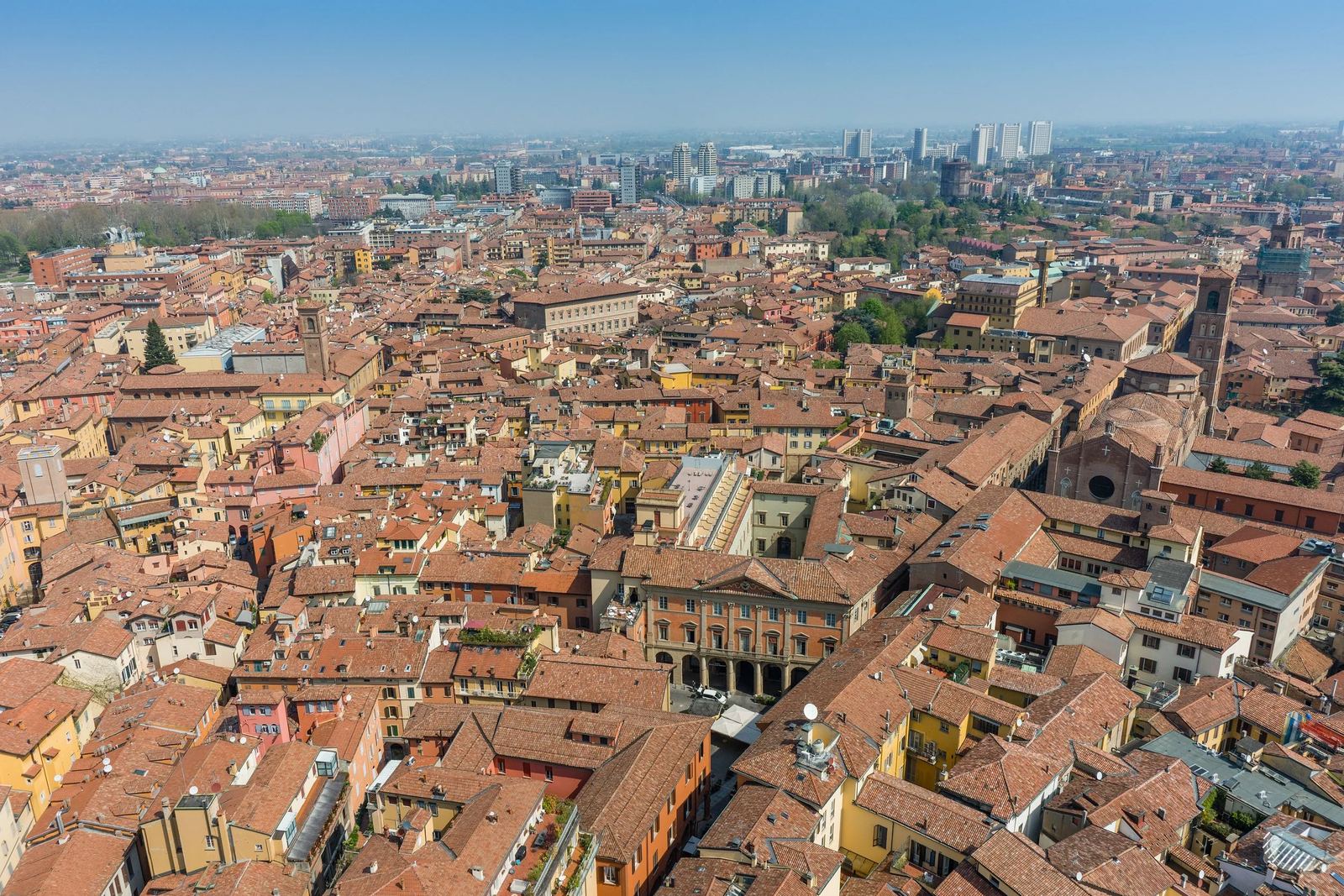
The urban heat island is the local increase in air and surface temperature in cities compared with the surrounding rural areas. It has been discussed since the nineteenth century, but the phenomenon has become more pronounced in recent years, helped along by global warming. The difference from rural areas is felt above all in the evening and at night, when asphalt and concrete release the heat they accumulated during the day, and under favourable conditions it can reach +10°C.
The causes are mostly tied to how cities are built: asphalt and concrete absorb solar radiation and release it slowly, the scarcity of vegetation reduces the evapotranspiration that normally cools the air, and tall buildings and narrow streets trap heat by hindering ventilation. Add to that the anthropogenic heat from traffic, air conditioners and industrial activity, which feeds a vicious circle: more heat, more air conditioners running, more heat released into the street.
The consequences are not abstract: it is the urban heat island that amplifies the effects of heatwaves, with repercussions for residents' lives. Intense heat puts the body under stress and shows up in everyday life as tiredness, difficulty concentrating and lower productivity. For the most vulnerable groups, such as the elderly and small children, the risks become more serious: suffice it to say that in summer 2026 heatwaves in Europe caused thousands of deaths.
There are also economic repercussions that are often underestimated: when extreme heat pushes up the energy costs of cooling, keeping conditions adequate at home becomes more expensive.
Thermal comfort, between degrees and perception
Reducing heat islands does not only mean lowering the temperature measured by sensors, but also improving thermal comfort, that is, the subjective perception of feeling at ease in an environment, which depends on temperature, humidity, wind, solar radiation and individual factors such as clothing or the activity being carried out.
For this reason, two spots in the same city with similar air temperatures can feel very different in terms of perceived comfort, depending on the presence of shade, water or vegetation.
Numerous surveys carried out in cities around the world show that measured conditions and the conditions people perceive often do not match. One study found that people can "feel" as too hot places that do not always correspond to those with the highest surface temperatures. This perception can influence concrete choices, such as changing route to stay in the shade.
Thermal comfort, then, is as much a matter of degrees as of perception and habits.
The two speeds of solutions
Faced with a problem that worsens from one season to the next, cities are moving on two tracks.
On one side are immediate responses, designed to give residents concrete relief on the hottest days. These include climate shelters: public spaces, often already existing (libraries, parks, community centres), identified as places to find relief from the heat, often combining shade, drinking water and ventilation.
They are simple to set up because they do not require new construction, and in fact a growing number of Italian administrations have moved in this direction. Florence has mapped 53 climate shelters, Milan has identified 116 "Spazi Freschi" ("Cool Spaces") among libraries, drinking fountains and green areas, and in Rome the RESPIRO project maps the city's existing and potential climate shelters.
They remain, however, measures that ease the effects of heat without acting on its causes.
On the other side are long-term solutions, which do not merely offer shelter but act directly on the temperature of the city by changing the surfaces and materials it is made of.
Among these, urban greenery is one of the most studied strategies, and its effectiveness is by now well documented. A study carried out in Padua estimated that, during the day, the areas beneath tree canopies can be almost 10°C cooler than the surrounding impervious surfaces, while an analysis of more than 600 European cities estimated that at least 16% tree cover is needed to lower the average summer temperature by one degree.
The potential of greenery, however, is best expressed when it stops being a set of isolated interventions and becomes a system.
This is the idea behind green and blue infrastructure: planned networks of parks, vegetated corridors, green roofs and water bodies designed to work as a system, not as isolated interventions. They are the most effective over time, but also the slowest and most complex to build, because they require space, resources and planning that often spans several administrations and many years.
Changing pace
The message coming from both science and administrations is consistent: after a summer like the one just described, heat islands are no longer a topic for climatologists alone, but an increasingly prominent item on the agenda of those who govern cities.
And the real challenge now is to pair immediate responses, useful but not decisive, with structural interventions on the urban fabric: slower, but the only ones able to truly change the climate of our cities.
RUMA's contribution
At RUMA we work on exactly this front.
Using satellite data we can map cities' surface temperatures and pinpoint where heat islands are most severe and which neighbourhoods and population groups are most exposed. Alongside this information we identify the distribution of trees, drinking fountains and other elements that contribute to thermal comfort, to get a more complete picture of each area.
This kind of analysis is the starting point for those who must decide where and how to intervene to mitigate the phenomenon and ease the difficulties of those who live and work in the city.
Sources: Abunyewah et al., 2025; Aram et al., 2020; Battista et al., 2020; Cheval et al., 2024; Comune di Firenze, 2026; Comune di Milano, 2026; Comune di Roma, RESPIRO project; Greenpeace Italia, 2026; il Dolomiti, 2026; il T Quotidiano, 2026; Lauwaet et al., 2024; Lehnert et al., 2023; Marando et al., 2022; Nikolopoulou, 2011; Nocerino et al., 2026; Autonomous Province of Trento, 2026; Semenzato & Bortolini, 2023; The Guardian, 2026.
Image source: https://www.pexels.com/
- Heat islands
- Thermal comfort
- Urban greenery
- Green infrastructure