Examples, benefits and limits of urban networks of greenery and water, from design to monitoring.
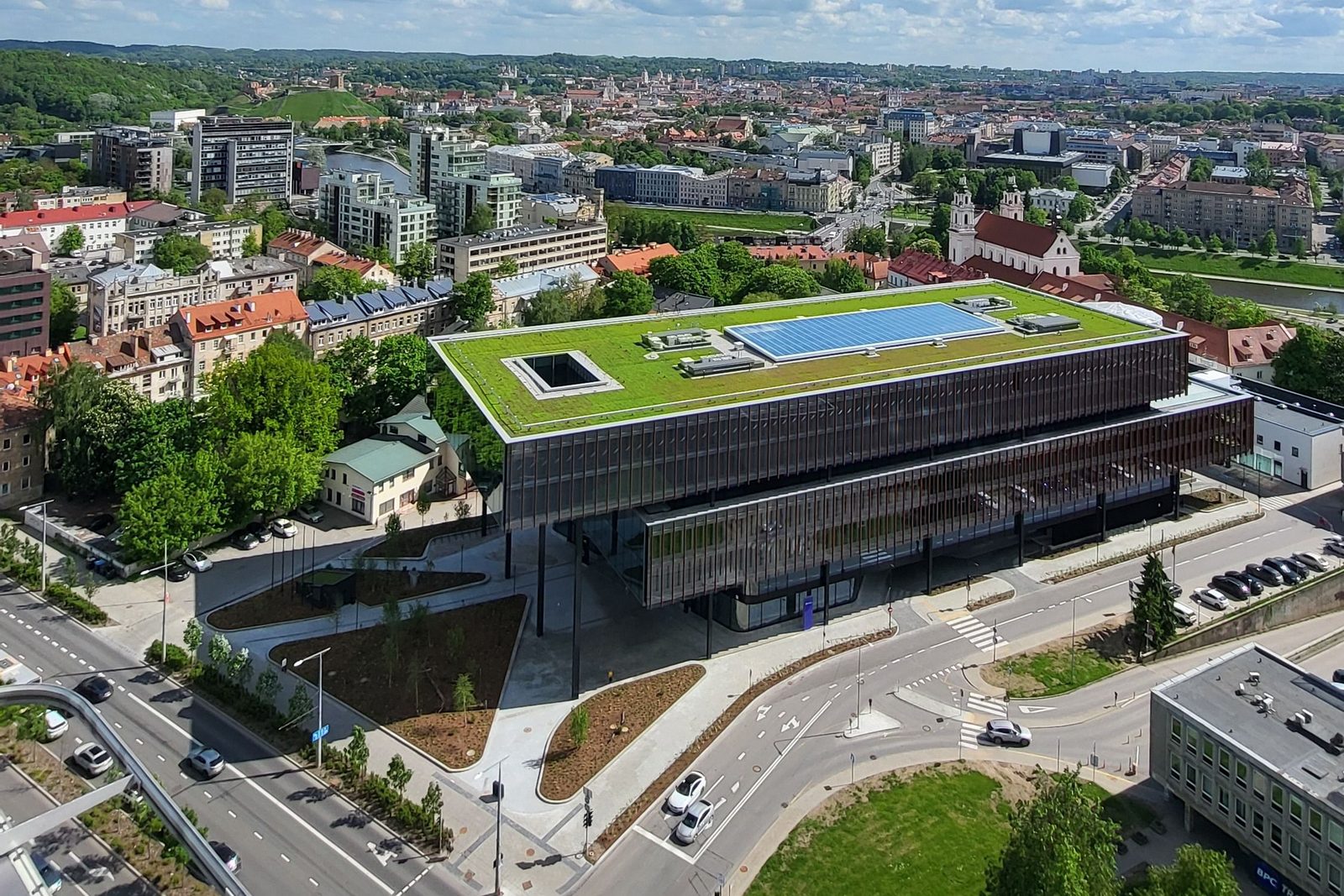
Green and blue infrastructure is among the most effective solutions against heat islands (to learn more about heat islands click here!), but also among the slowest to build.
As confirmation of their role, the City Climate project, born in Trento from a collaboration between the municipality and the university, shows that the way cities are built is decisive for the comfort of those who live in them.
The sensors installed showed how much the surface we walk on matters: on clear days, they recorded temperatures up to 2–3 °C higher in some asphalted streets and squares than in parks, where vegetation cools the air through evapotranspiration (Trento's Urban Green Plan, downloadable here). Heat, however, is only one of the reasons cities invest in greenery and water: the same spaces that cool the city do a lot more besides.
What are green and blue infrastructure?
For the European Union, green infrastructure is a network of natural and semi-natural areas, strategically planned and managed to deliver a wide range of ecosystem services. This network includes green spaces, or blue ones when they are aquatic ecosystems.
Blue infrastructure therefore means the bodies of water, natural or artificial, found in cities: ponds, canals, rivers, streams, lakes and wetlands. Besides temporarily holding water and slowing runoff, they cool the surrounding environment because they absorb heat and release it through evaporation.
When the two components are integrated we speak of green and blue infrastructure, a term that refers to networks of open spaces and water bodies designed to perform several functions together, such as limiting flood risk and mitigating urban heat.
The key word is network. It matters not only how many trees there are, but above all how well they are connected to one another and how many functions they perform together, for example: cooling, rainwater management, biodiversity, health.
What benefits do green and blue infrastructure offer?
- They cool the city
Trees and green areas cool the air with shade and evapotranspiration, and the areas under the canopy are generally much cooler than the surrounding impervious surfaces. The effect grows with the amount of tree cover. The same goes for water, since it absorbs heat and cools through evaporation. This effect extends for a few hundred metres around bodies of water. It does depend on size, though: very small water bodies can even heat up, and at night, with no wind, a lake can release the heat it has accumulated. - They reduce urban runoff
Climate change makes rainfall more frequent and intense, and with it the risk of flooding. In the simulations gathered in the literature, combining green and blue elements, such as vegetated channels and retention basins, is the most effective strategy for reducing runoff into the sewers, although field studies are lacking. Not by chance, among professionals in four cities at the forefront of the topic, water management is the benefit considered most important. - They reduce pollutants
In the air, tree leaves intercept gases and fine particulate matter, although the type of vegetation chosen and its arrangement matter a great deal, because in narrow, busy streets trees can hinder air exchange. In the soil, plants and microorganisms can degrade or immobilise metals and organic contaminants, a technique called phytoremediation. Water purification and noise reduction also appear among the services attributed to these infrastructures. - They improve social wellbeing
Then there is the more everyday side. Spending time in natural spaces has a restorative effect, improves mental wellbeing, encourages physical activity, fosters social relationships and offers the chance to enjoy the landscape. - They protect urban flora and fauna
A small isolated park is not enough to sustain fauna and flora, whereas connections between green areas allow animals to move and seeds to spread.
None of these benefits, on its own, is enough to explain why building a network pays off. It is the sum of functions, performed in the same spaces, that makes the difference.
Why is building and maintaining green and blue areas complex?
If green and blue infrastructure works, why don't cities build more of it?
The obstacles are similar in very different countries: the international literature sums them up as technical, social and institutional barriers that recur from Belgium and the Netherlands to Brazil and Pakistan. The main obstacles to building green and blue infrastructure are:
- Difficult coordination
Collaboration between the public and private sectors and dialogue between the different sectors involved are often lacking. - Insufficient funding
A lack of mechanisms to fund both the initial investment and maintenance over time, which is considered a financial as well as an operational obstacle. - Resistance and inequality
Prejudices about costs, maintenance and risks limit the full use of green and blue infrastructure, whose benefits can be distributed unevenly and contribute to the displacement of the most vulnerable residents. - Slow planning
In 2024, the urban green plan had been approved in just over one provincial capital in ten. These plans are not binding, are often disconnected from other urban planning tools and bear the costs of construction and management. - Limited space
In Bolzano Sud, where roofs cover 44% of the surface and only 7% of the soil is permeable, ground-level greenery is hardly practicable and the focus is on green roofs. Simulations indicate that they lower air temperature in the hottest hours by up to 0.4°C, and by up to 0.7°C with a 20-centimetre substrate, an effect that improves when combined with trees, water and parks.
How RUMA contributes to monitoring urban greenery
Planting greenery is not enough; the success of green and blue infrastructure depends above all on its design and on systematic monitoring.
At RUMA we work on the knowledge that comes before and after an intervention. Using satellite data we map cities' surface temperatures and alongside it identify trees and other green elements, to understand where infrastructure is needed most and what is already there. Repeating these analyses over time then makes it possible to observe how conditions change after an intervention, which is how you find out whether it worked.
To find out more about how environmental data can support your organisation's decisions, call us on +39 378 3045050 or write to us at info@rumaecolab.com.
We look forward to hearing from you!
Sources: Almaaitah et al., 2021; Celletti et al., 2025; European Commission, 2019; Comune di Trento, 2025; Cortinovis et al., 2018; D’Onofrio et al., 2025; Fricke & Kabisch, 2026; Goldenberg et al., 2021; Grabowski et al., 2022; Kumar et al., 2024; ISTAT, Urban Environment 2024; Marando et al., 2022; Monteiro et al., 2020; O’Donnell et al., 2021; Santiago et al., 2022; Semenzato & Bortolini, 2023; Sokolova et al., 2025; Tapia & Reith, 2025; Veerkamp et al., 2021.
Image source: https://www.pexels.com/
- Green and blue infrastructure
- Urban greenery
- Urban comfort