Who RUMA is, where the name Rural Urban Metabolism Agency comes from and how we turn environmental regeneration projects into measurable, certifiable and strategic value.
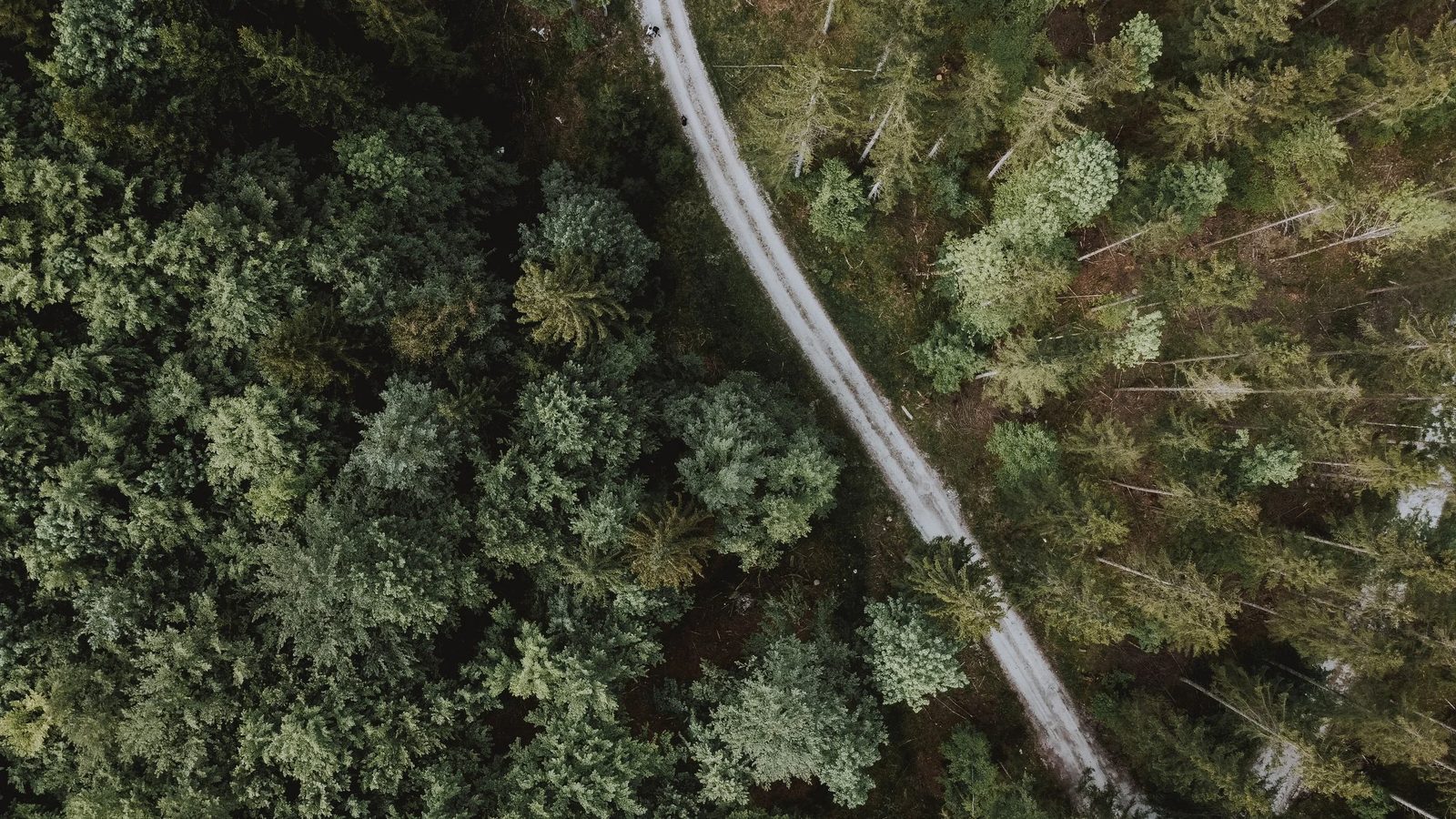
In the world of sustainability, declaring a commitment is no longer enough. Today, companies, investors and stakeholders demand solid data, verifiable metrics and concrete results. This is where RUMA comes in, an organisation specialised in turning environmental regeneration projects into measurable, certifiable and strategic value.
In this article we tell you who we are, what we do and why RUMA was born.
Who is RUMA?
RUMA is a company dedicated to environmental monitoring and certification that combines scientific, technological and strategic expertise to support those who choose to invest in nature in a serious, measurable way.
RUMA stands for Rural Urban Metabolism Agency. Our identity is tied to applying calculation methods to measure emissions and offset the impact generated on the territory by architectural and infrastructure projects, events and tourism activities. We analyse materials and emissions with a systemic approach, considering the territory as a living organism with a metabolism of its own.
Over time, however, we realised that the word "agency" no longer fully described what we had become. RUMA is not an intermediary, nor a simple service provider. RUMA is a laboratory: a shared space for research, experimentation and collaboration, where different skills talk to one another to deliver concrete solutions. It is a place made of relationships, continuous study, rigorous analysis and strategic vision, oriented in a single direction: the regeneration of natural areas.
We believe that collaboration is essential to leave behind a cleaner, healthier world. Environmental regeneration does not come from grand declarations, but from small daily actions that, added together and guided by a clear strategy, produce deep transformations. We are convinced that the environmental problem is first of all a social and cultural problem: without a change of mindset, no technology will be enough.
With this awareness we work alongside companies, forest owners, investors and organisations that believe in environmental regeneration and want to demonstrate the benefits of their commitment with objective data. We help them turn intention into scientific evidence, building paths that are measurable, traceable and certifiable.
Our team is made up of: Angelica Pianegonda, founder and CEO; Francesco Geri, founder and CTO; Sara Favargiotti, founder and Scientific Advisor; Marco Ciolli, founder and Scientific Advisor; Gabriele Moser, research and development technician; Bruno Antolini, technical manager.
Thanks to our technical team we do not stop at theoretical consulting or generic guidelines: we get into the substance of projects, study them in depth, analyse their critical points and potential, and develop solid monitoring and certification systems.
In a context where greenwashing is under ever closer scrutiny and credibility has become a strategic asset, RUMA positions itself as a technical and scientific partner able to guarantee transparency, traceability and methodological rigour. For us, sustainability is not a label, but a structured, verifiable process oriented towards concrete results over time.
RUMA's mission
The RUMA team is made up of qualified technicians, environmental measurement professionals, forest management experts and data analysts, but above all of people deeply in love with nature and everything that makes it up. Scientific expertise and environmental sensitivity coexist every day in our work: we do not study ecosystems merely to analyse them, but to protect and enhance them with respect and responsibility.
Our vision for the future unites us as a group and belongs to each of us. It is clear, concrete and unmistakable: to leave the planet in a better state than we found it. It is not a slogan to put in a presentation, but a direction that guides every technical choice, every project we follow and every strategic decision.
We deeply believe in the principle "Think global, act local" and we want to be real support for all initiatives that share this vision. That is why our consulting work is backed by continuous research, rigorous analysis, data study, fieldwork and, above all, by many questions to which we want to give concrete answers. Answers that are useful not only to us, but to the companies, communities and territories we work with.
Planting trees or cutting back on packaging is no longer enough. What is needed is a system, a structured strategy, a clear plan of actions and monitoring tools that guarantee stability and measurable results over time. Environmental commitment for a better world must be measured, improved and, above all, shared.
RUMA aims for exactly this: to accompany every project along a structured, quantifiable and truly sustainable path, turning even small daily actions into a concrete, lasting and demonstrable impact.
Why is measuring environmental impact essential today?
Investing in an environmental regeneration project is an important step. But without measurement, monitoring and certification, that investment risks remaining invisible or, worse still, not very credible.
Companies must respond to ever stricter regulations, to customers' demands for transparency and to increasingly structured ESG criteria. RUMA was born precisely to bridge this gap between good intentions and scientific demonstration of impact. Here is how we set out to do it.
RUMA's services
Carbon monitoring and certification
Measuring environmental impact has always been a complex process, often manual, costly and discontinuous. Traditionally, certifying a forestry project requires periodic site visits, field sampling and checks carried out years apart. This means static data, infrequent updates and high margins of uncertainty.
RUMA goes beyond this model.
By integrating satellite technologies for the Digital Twin, LiDAR surveys, drones and AI-based analysis systems, we build continuous monitoring systems able to update data over time and drastically reduce the uncertainty in estimates.
We do not measure once every five years. We build a system that observes, analyses and verifies constantly.
RUMA connects companies and territory
Another pillar of RUMA's activity is the connection between businesses and local projects dedicated to environmental regeneration.
Many companies get in touch wanting to redeem or offset their environmental footprint, but without really knowing which projects to choose that fit their identity and goals, how to assess their reliability and how to integrate the initiative into their corporate strategy.
RUMA selects coherent environmental restoration projects and analyses them technically, creating a bridge between investors and territory. It is not only about funding an initiative, but about building a relationship of value and trust for a better future.
It is above all through people's direct involvement that sustainability becomes a concrete value. That is why RUMA supports companies with team building initiatives linked to environmental projects. By taking part in fieldwork, everyone can better understand the processes that drive restoration and see first-hand the positive impact generated.
This creates greater internal awareness, real engagement of people, a stronger corporate culture and consistency between declared values and concrete actions. With RUMA, environmental commitment becomes a shared action.
Technological innovation for forest survey services
Modern forest management becomes more efficient and safer thanks to the technological means available. RUMA integrates advanced tools and technical expertise to turn green assets into something measurable, safe and productive.
With the forest Digital Twin we create a parallel digital map of the woodland concerned. The Digital Twin makes it possible to simulate growth scenarios, estimate future carbon uptake and assess potential risks. This approach allows decisions based on solid data and more effective long-term planning.
Through satellite data and LiDAR surveys, RUMA obtains high-precision information on vegetation structure, tree height and forest density. These tools make it possible to monitor large areas, reduce uncertainty in deforestation estimates, update data periodically and improve the accuracy of certifications.
Technology thus becomes an ally of transparency.
Why choose RUMA?
Training people, accompanying them on a path of growth, helping them understand the real impact of their choices means working on the root of the problem. Without individual awareness there can be no collective transformation. For RUMA this is as fundamental as supporting companies in structured processes of environmental measurement, monitoring and certification.
Because, deep down, it is the same principle applied at different scales.
On the small scale, we work on culture, habits and personal responsibility. We help individuals and teams understand that every choice has a measurable consequence on the environment and that change starts from within.
On the large scale, we apply the same approach to organisations: we analyse data, quantify emissions, measure carbon capture. Here too the goal is identical: to make impact visible, take responsibility for one's actions and build value over time.
The difference is not in the principle, but in the scale. On the small scale, awareness is cultivated. On the large scale, the method is structured. On the small scale, mindsets change. On the large scale, certifiable systems are built. But the direction is the same: turning intention into concrete results.
RUMA is at the service of those who want to take a real step forward, not a symbolic one. Of those who understand that "doing good" is not a slogan, but a process that requires consistency, measurement and continuity. Whether it is accompanying a team on a path of growth or supporting a company in quantifying its environmental impact, our work responds to the same vision: to create awareness, generate responsibility and turn commitment into tangible, lasting value.
- RUMA
- Monitoring
- Certification
- Digital Twin