Growing two or more species in the same plot: the scientific evidence on intercropping, the Land Equivalent Ratio, the benefits for soil and water and the barriers holding back its spread in Europe.
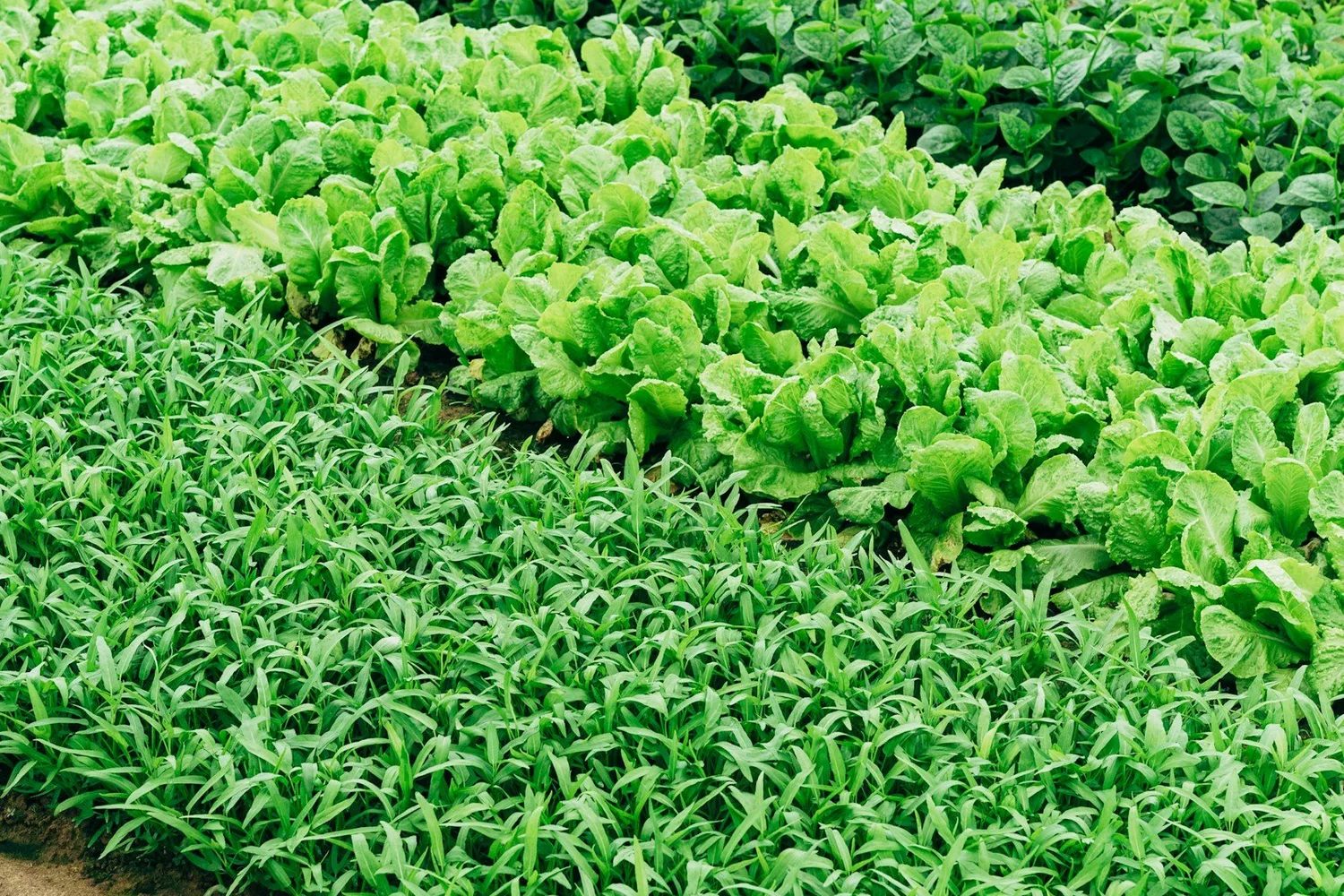
When innovation meets tradition: how growing several species together can save the future of agriculture.
The world's population will reach 9.8 billion by 2050 (UN, 2023). Demand for food will grow by 50%, and demand for cereals by as much as 70% (IPCC, 2023; FAO, IFAD, UNICEF, WFP and WHO, 2023). Faced with this epoch-making challenge, conventional intensive agriculture shows all its limits: dependence on chemical fertilisers, pesticides, aggressive soil tillage and ever more unsustainable water consumption. Yet the solution may be simpler than we think, and it is rooted in millennia of agricultural wisdom: intercropping, the simultaneous cultivation of two or more species in the same plot.
RUMA's contribution
RUMA recently took part in an important seminar that brought together partners from across Europe to discuss the future of sustainable agriculture. The Trentino agronomist Federico Bigaran presented some of the most advanced scientific results on intercropping, contributing to a debate in which Europe is at the forefront of the transition towards more resilient agricultural systems. The message is clear: we can no longer afford to continue with intensive monoculture. The data speak for themselves.
Why intercropping works: the scientific evidence
1. Root complementarity: exploring the soil in depth
The fundamental principle of intercropping lies in the differentiation of root systems. When cereals and legumes are grown together, their roots explore different soil layers: cereals take up nutrients from the surface layers, while legumes, with their robust root system, draw from the deeper zones (Maitra et al., 2021).
This three-dimensional use of the soil profile means that:
- Resources are not wasted: water and nutrients available at different depths are used in a complementary, not competitive, way
- Erosion is reduced: a denser, layered root cover stabilises the soil
- Organic matter increases: more root biomass translates into more sequestered carbon (Cong et al., 2015)
2. The Land Equivalent Ratio (LER): the efficiency metric
How is the advantage of intercropping measured scientifically? Through the Land Equivalent Ratio (LER), the most widely used indicator internationally (Mead & Willey, 1980). The LER calculates how much monoculture land would be needed to obtain the same production as an intercropped plot. It is calculated as:
LER = (Yield of crop A in intercropping / Yield of crop A in monoculture) + (Yield of crop B in intercropping / Yield of crop B in monoculture)
An LER greater than 1.0 indicates that intercropping is more efficient. For example, an LER of 1.4 means that 1.4 hectares of monoculture would be needed to produce as much as 1 hectare of intercropping: a 40% gain in land-use efficiency.
Studies carried out in different geographical contexts report LER values ranging from 1.2 up to 1.67, with even higher peaks under optimal conditions (Willey, 1990). In China, sorghum–pigeon pea and millet–peanut intercrops recorded an LER of 1.67, indicating a 67% increase in productivity per unit of land.
3. Soil fertility: the role of nitrogen fixation
When legumes and cereals grow together, something extraordinary happens. Legumes, through their symbiosis with bacteria of the genus Rhizobium, fix atmospheric nitrogen in the soil, making it available to the companion crops through root exudates and the decomposition of residues (Latati et al., 2017). A ten-year study carried out in Gansu province, China (Wang et al., 2015), showed productivity increases of 28.6% and 32.4% for faba bean–maize and wheat–maize intercrops respectively, thanks to the optimisation of soil pH and the maintenance of chemical properties. Another 16-year study (Li et al., 2021) documented a 22% increase in yield thanks to improved soil physical structure and increased organic matter and macroaggregates.
The result? A drastic reduction in the need for synthetic nitrogen fertilisers, with all the economic and environmental benefits that follow.
4. Soil microbiomes: the invisible ecosystem
Soil microorganisms are the invisible architects of fertility. Intercropping regulates microbial communities through root exudates, organic compounds (sugars, amino acids, organic acids, vitamins) that plants actively release into the soil around their roots, promoting the development of beneficial microorganisms that:
- Increase the availability of nutrients (carbon, nitrogen, phosphorus)
- Prevent soil-borne diseases
- Improve soil structure and quality
- Restore ecological balance
The diversity of root exudates in polyculture systems creates different ecological niches, favouring greater microbial richness and diversity than monocultures (Wang et al., 2021). This soil biodiversity translates into greater resilience of the whole agricultural system.
5. Integrated pest and disease management
The most recent studies show that specific intercrops drastically reduce populations of harmful insects. One study (Li et al., 2021) showed that intercropping peppers with rosemary reduced by 62–83% the density of mites (Tetranychus urticae) and other key pests, without using any chemical product. The mechanisms at work are multiple:
- Emission of volatile organic compounds (VOCs) that confuse or repel pests
- A more favourable habitat for natural predators
- Physical barriers that hinder the spread of pathogens
- Greater biodiversity that makes a plot less attractive to a specialist pest, that is, one that feeds mainly on a single crop
Further confirmation comes from an Australian study (Zhou et al., 2023) that documented how chickpea–flax intercropping significantly reduced the incidence of Ascochyta blight in chickpeas.
6. Water efficiency: producing more with less water
In an age of growing water scarcity, intercropping offers a concrete solution. Strip systems can save 20% to 50% of water and land (Raza et al., 2022), thanks to:
- Expanded leaf cover: the diversity of plant heights and architectures creates a cooler microclimate that reduces evaporation from the soil
- Complementary root systems: roots that explore different soil layers use the water available throughout the profile, minimising losses through deep percolation
- Reduced soil temperature: mutual shading lowers surface temperatures, reducing water stress (Yin et al., 2019)
Studies carried out in Iran on sorghum–clover intercrops showed that intercropping systems under reduced irrigation (75% of the standard water supply) still produce satisfactory yields with significant water savings (Pourali et al., 2023).
Why intercropping is not widespread: the main obstacles
Why is it that, despite its many benefits, intercropping does not feature among the most widespread agronomic practices in the world, and is instead relegated to the margins of modern agriculture? According to an analysis carried out by the IntercropVALUES project on 13 European case studies, more than 200 barriers hinder the development of intercropping, revealing a complex picture that involves the whole agri-food chain. What makes the situation particularly critical is the systemic nature of these obstacles: rather than being isolated elements, the barriers emerge from a complex network of interactions and reinforce one another. Farmers in particular have to face numerous "external" barriers, imposed by other actors in the chain rather than arising from their own means, such as the purity standards required by collectors and processors. This underlines how intercropping cannot develop without the coordinated commitment of all stakeholders in the food chain, including policymakers. The main barriers by category, drawn from the results of the IntercropVALUES project, are listed below.
Technical barriers
- Unknown efficiency of grain separation machinery
- Risk of contamination with allergens (e.g. gluten)
- Need for additional passes to separate the grain
- Risk of impurities in the harvest
- Difficulty in increasing production scale (scaling-up)
Financial barriers
- Additional labour costs
- High price of intercropped products
- Fear of economic losses and lack of profitability
- Investments needed in specific machinery
- Risk of food crops being downgraded to fodder
Knowledge-related barriers
- Knowledge gaps in all aspects of intercropping (production, processing, storage, marketing)
- Lack of experience in grain separation
- Existing knowledge that is not adequately transferred to stakeholders
- Insufficient training of agricultural advisers
Market barriers
- Lack of demand for intercropped products
- Low value attributed to mixed or contaminated batches
- Scarcity of downstream actors who value intercropping
- Consumer reluctance towards new products
- Lack of dedicated distribution channels
Cultural barriers
- Fear of lower yields
- Resistance to changing traditional farming practices
- Low awareness of the environmental and economic benefits
Organisational barriers
- Lack of coordination among the different actors in the chain
- Absence of supply chains dedicated to intercropping
- Difficulties in logistics and flow management
Regulatory and contextual barriers
- Lack of awareness of intercropping in authorities' reporting tools
- Maximum impurity thresholds required by European regulations
- Incompatibility with some CAP measures (e.g. GAEC 7 on crop rotation)
- Uncertainty about how to declare intercropping in CAP declarations
The Mediterranean area: a unique opportunity
Although it presents numerous obstacles to implementation, intercropping offers several advantages in all areas, and especially in those with a Mediterranean climate. Hot, dry summers and mild winters create the ideal conditions for its implementation. The region faces specific challenges, such as a temperature increase 25% above the global average (Cramer et al., 2018), growing water stress and soil degradation, which make the adoption of more resilient agricultural practices urgent. Studies carried out in Italy have shown that legumes intercropped with rice and cereals in Mediterranean environments use natural resources effectively, representing a sustainable approach particularly suited to these climatic conditions (Saia et al., 2016). Research has also shown that intercropping can help reduce soil salinity, a growing problem in Mediterranean irrigated areas (Su et al., 2024).
Intercropping in Europe: projects and prospects
Europe is investing significantly in intercropping research through Horizon projects such as IntercropVALUES and LEGUMINOSE. The goals are ambitious:
- Reduce the use of nitrogen fertilisers
- Decrease the use of pesticides
- Increase local legume production
- Improve the nutritional quality of harvests
- Increase agricultural biodiversity
What RUMA is doing
RUMA's commitment does not stop at taking part in international conferences. Our vision is to translate scientific research into concrete practices, adapted to the specific features of the Alpine and pre-Alpine territory. With the advice of experts such as Federico Bigaran, we are:
- Monitoring soil health through biological indicators
- Assessing the effectiveness of different agronomic practices on soil health
- Building networks with farmers, researchers and policymakers to transfer knowledge from research to farming practice
The future is polyculture
Intercropping is not a nostalgic practice, even though it is rooted in the past: it applies fundamental ecological principles (diversity, competition and facilitation) to build more productive, resilient and sustainable agricultural systems. The scientific evidence is solid, replicated in dozens of countries and different climatic conditions (Maitra et al., 2021; Brooker et al., 2023).
Keep following our blog for technical insights, research results and stories from the field. Because the future of agriculture is built today, one seed at a time.
Scientific sources: UN, 2023; IPCC, 2023; FAO et al., 2023; Maitra et al., 2021; Wang et al., 2015; Li et al., 2021; Cong et al., 2015; Mead & Willey, 1980; Willey, 1990; Latati et al., 2017; Zhou et al., 2023; Raza et al., 2022; Yin et al., 2019; Pourali et al., 2023; Cramer et al., 2018; Saia et al., 2016; Su et al., 2024; Brooker et al., 2023; IntercropVALUES Policy Brief.
- Intercropping
- Agronomy
- Land Equivalent Ratio
- Soil